
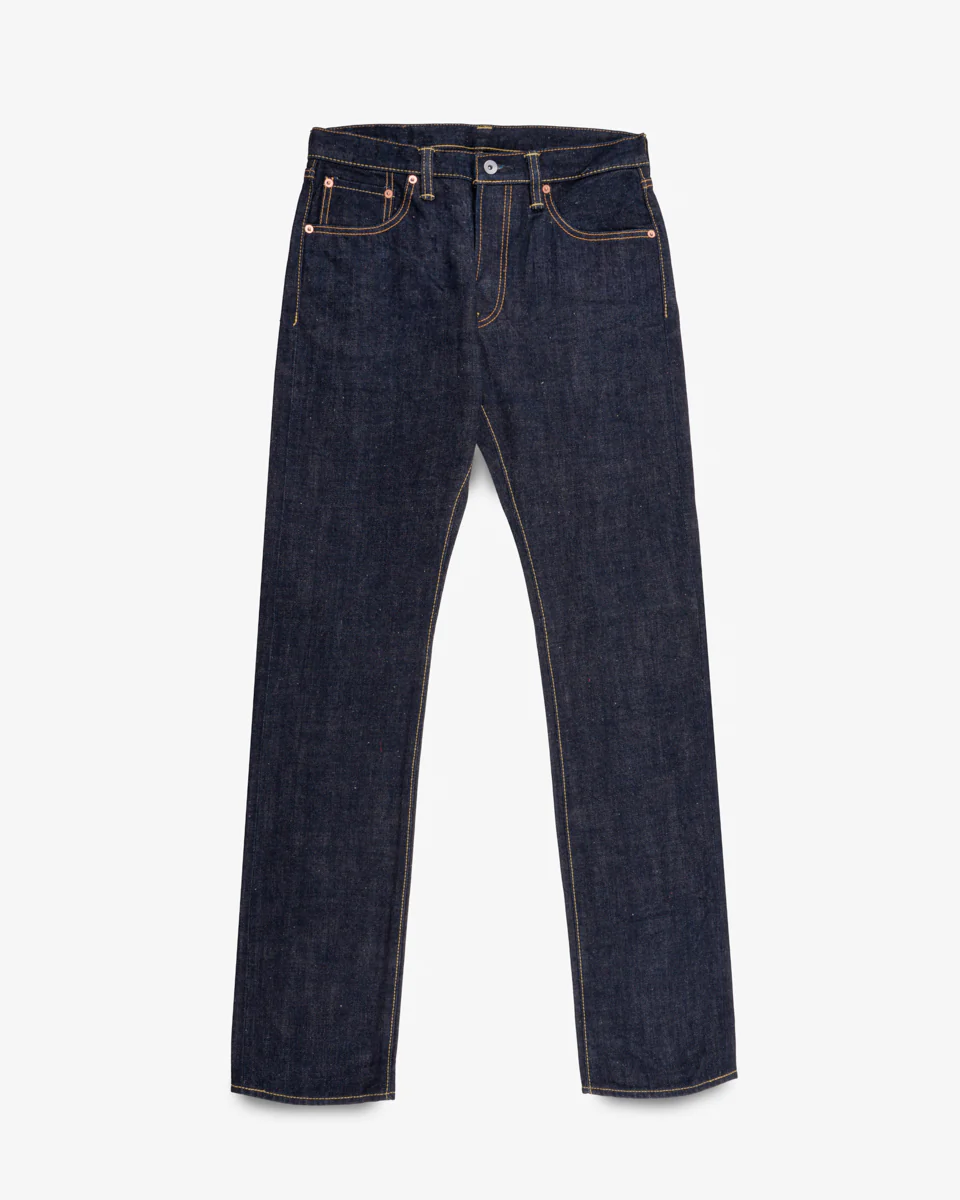
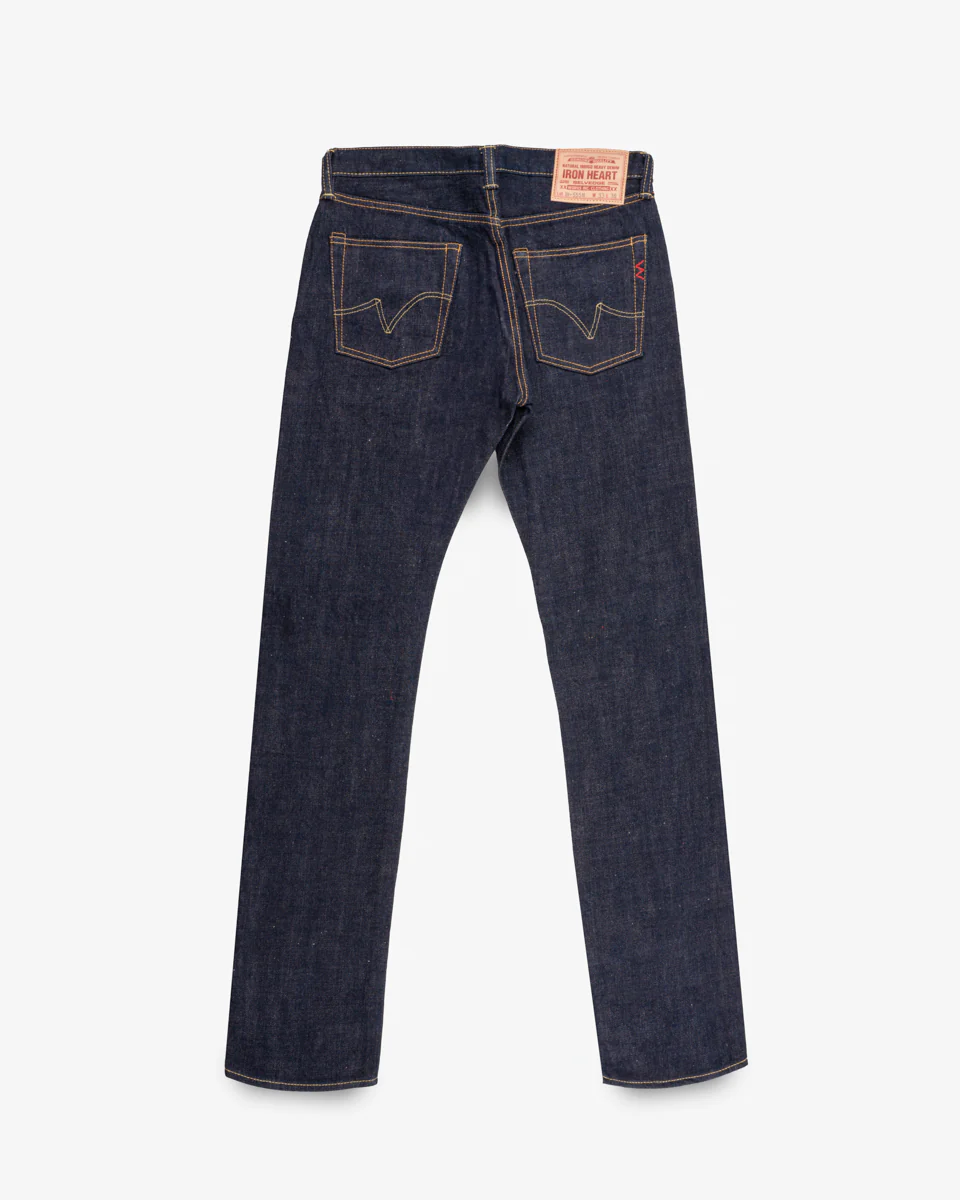
Iron Heart IH-555N – 17oz Selvedge Denim Slim Cut Jeans
345,00 €
Our medium/high rise slim cut jean in 17oz natural indigo/organic cotton selvedge denim. This denim is very reluctant to give up its indigo. so takes a long time to fade, but when it does it fades with a lot of contrast.
Made In Japan
– Designed by Shinichi Haraki, handmade by WORKS INC. in Japan
555 Slim Cut
– The slimmest fitting jeans cut in the Iron Heart lineup
–
Medium/high rise
–
Slim fit leg profile
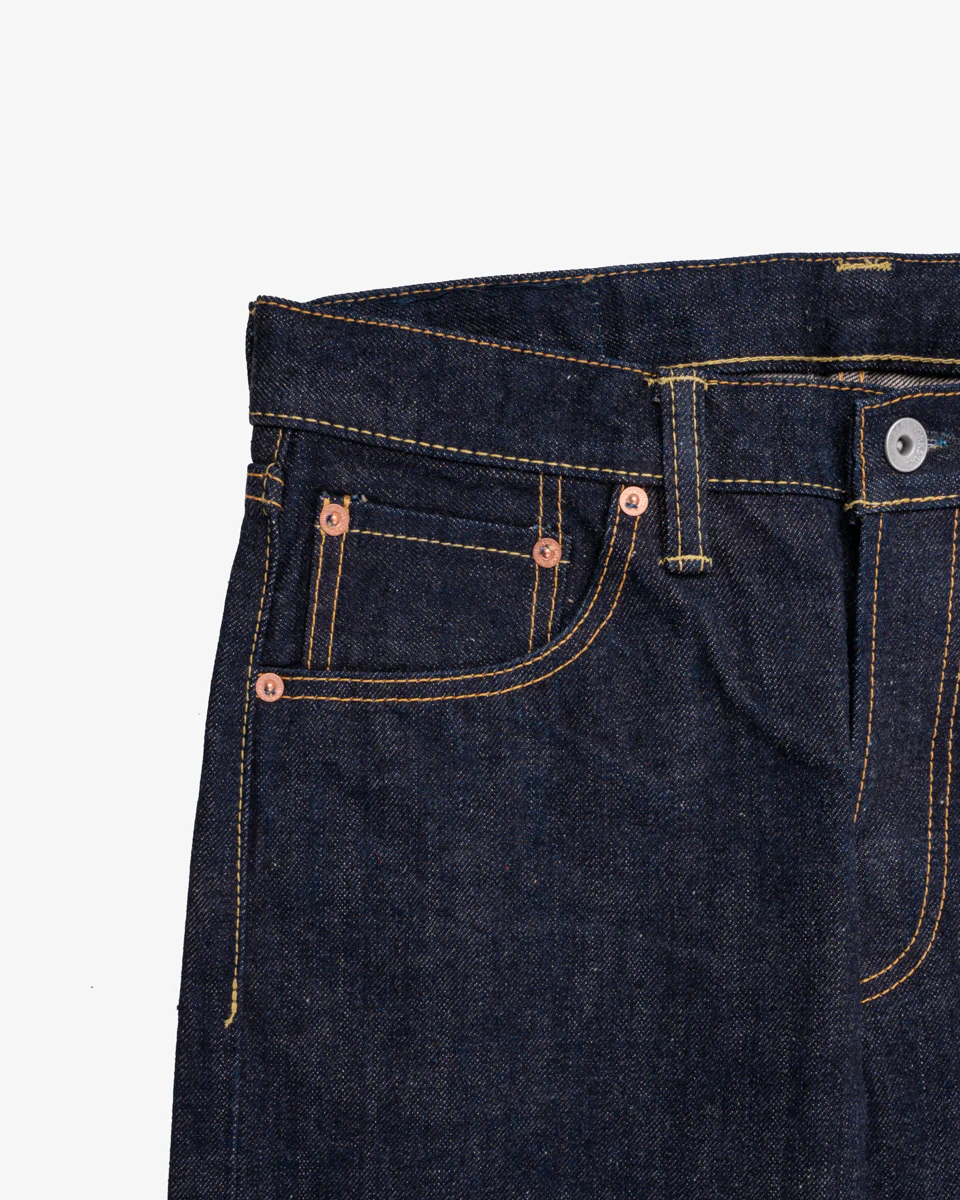
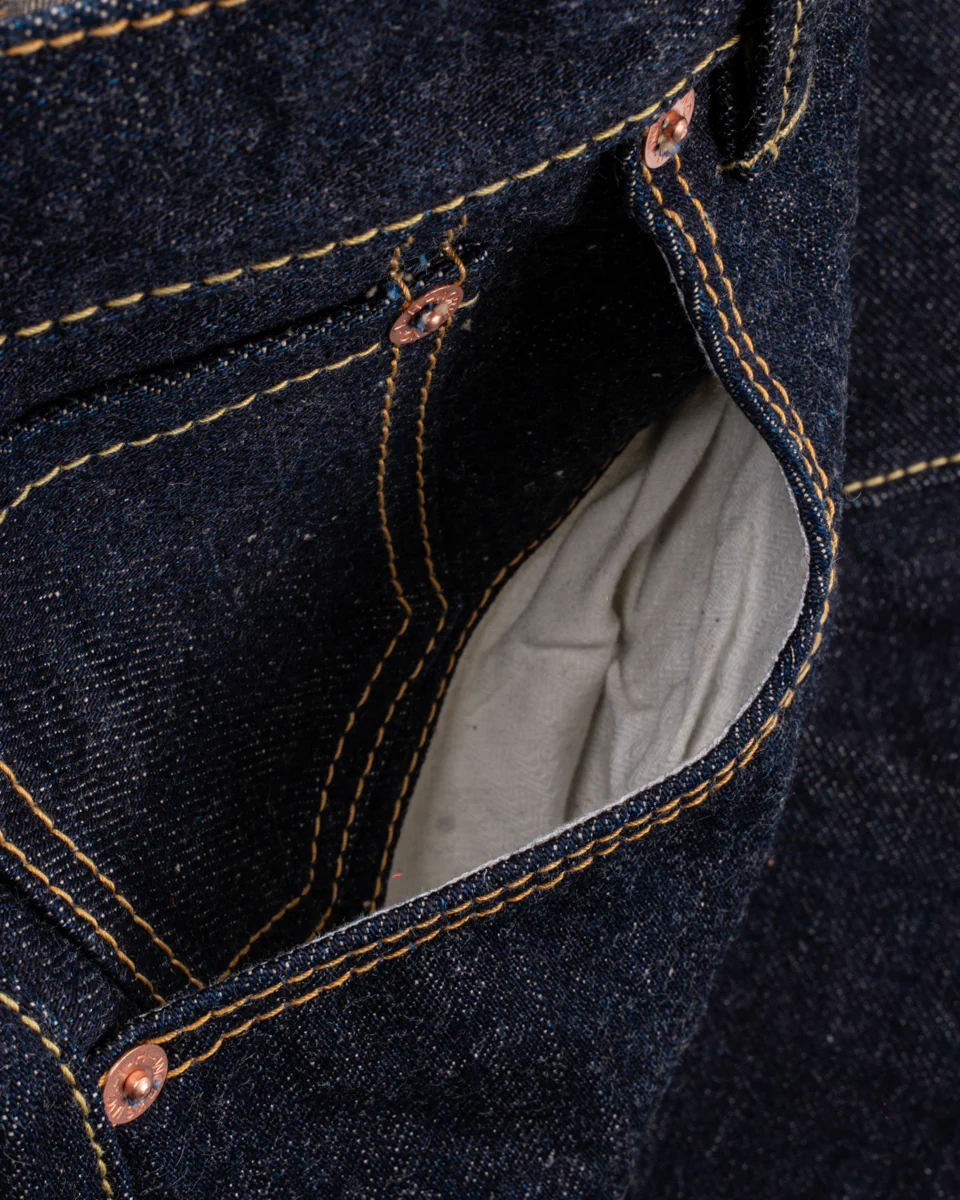
– Classic 5-pocket design
17oz Japanese [SelvedgeThe terms selvage (US English) and selvedge (British English) are a corruption of ‘self-edge’, and have been in use since the 16th century. Selvedge/Selvage is the term for the self-finished edges of the fabric. The selvedge keeps the fabric from unraveling or fraying and is a result of how the fabric is created. When it comes to denim, selvedge fabrics are created on a shuttle loom, the action of the shuttle being responsible for the finished edge. Selvedge fabric is largely considered to be superior to non-selvedge fabrics within the denim community, although this is not longer always the case. The quality of the cotton, the design of the fabric, the type of loom used and the skill of the weaver are the most important factors that affect the quality of the denim. A lack of these factors in the production of selvedge means that fabric with a selvedge ID can be of a mediocre or even poor quality. At the same time, fabric woven on projectile looms, with these factors present can be superior to other selvedge fabrics. Iron Heart produces a range of selvedge denims, chino and shirting fabrics woven on a variety of often vintage shuttle looms, by weavers with generations of experience, as well as premium quality non-selvedge fabrics.] Denim – Natural IndigoIn Japan, indigo became especially important in the Edo period when it was forbidden to use silk, so the Japanese began to import and plant cotton. It was difficult to dye the cotton fiber except with indigo. Even today, indigo is very much appreciated as a color for the summer Kimono Yukata, as this traditional clothing recalls Nature and the blue sea. A variety of plants have provided indigo throughout history, but most natural indigo was obtained from those in the genus Indigofera, which are native to the tropics. The primary commercial indigo species in Asia was true indigo (Indigofera tinctoria, also known as Indigofera sumatrana). A common alternative used in the relatively colder subtropical locations such as Japan’s Ryukyu Islands. See also ‘Indigo Dye’.
– 100% cotton
– Natural indigoIn Japan, indigo became especially important in the Edo period when it was forbidden to use silk, so the Japanese began to import and plant cotton. It was difficult to dye the cotton fiber except with indigo. Even today, indigo is very much appreciated as a color for the summer Kimono Yukata, as this traditional clothing recalls Nature and the blue sea. A variety of plants have provided indigo throughout history, but most natural indigo was obtained from those in the genus Indigofera, which are native to the tropics. The primary commercial indigo species in Asia was true indigo (Indigofera tinctoria, also known as Indigofera sumatrana). A common alternative used in the relatively colder subtropical locations such as Japan’s Ryukyu Islands. See also ‘Indigo Dye’. rope-dyed warpIn weaving, the weft is the term for the thread or yarn which is drawn through the warp yarns to create cloth. Warp is the lengthwise or longitudinal thread in a roll, while the weft is the transverse thread. A single thread of the weft, crossing the warp, is called a pick. Terms do vary (for instance, in North America, the weft is sometimes referred to as the fill or the filling yarn). / white organic cotton weftIn weaving, the weft is the term for the thread or yarn which is drawn through the warp yarns to create cloth. Warp is the lengthwise or longitudinal thread in a roll, while the weft is the transverse thread. A single thread of the weft, crossing the warp, is called a pick. Terms do vary (for instance, in North America, the weft is sometimes referred to as the fill or the filling yarn).
– Right-hand twill weave
– This denim will slowly fade through wear and washing
Hardware & Construction
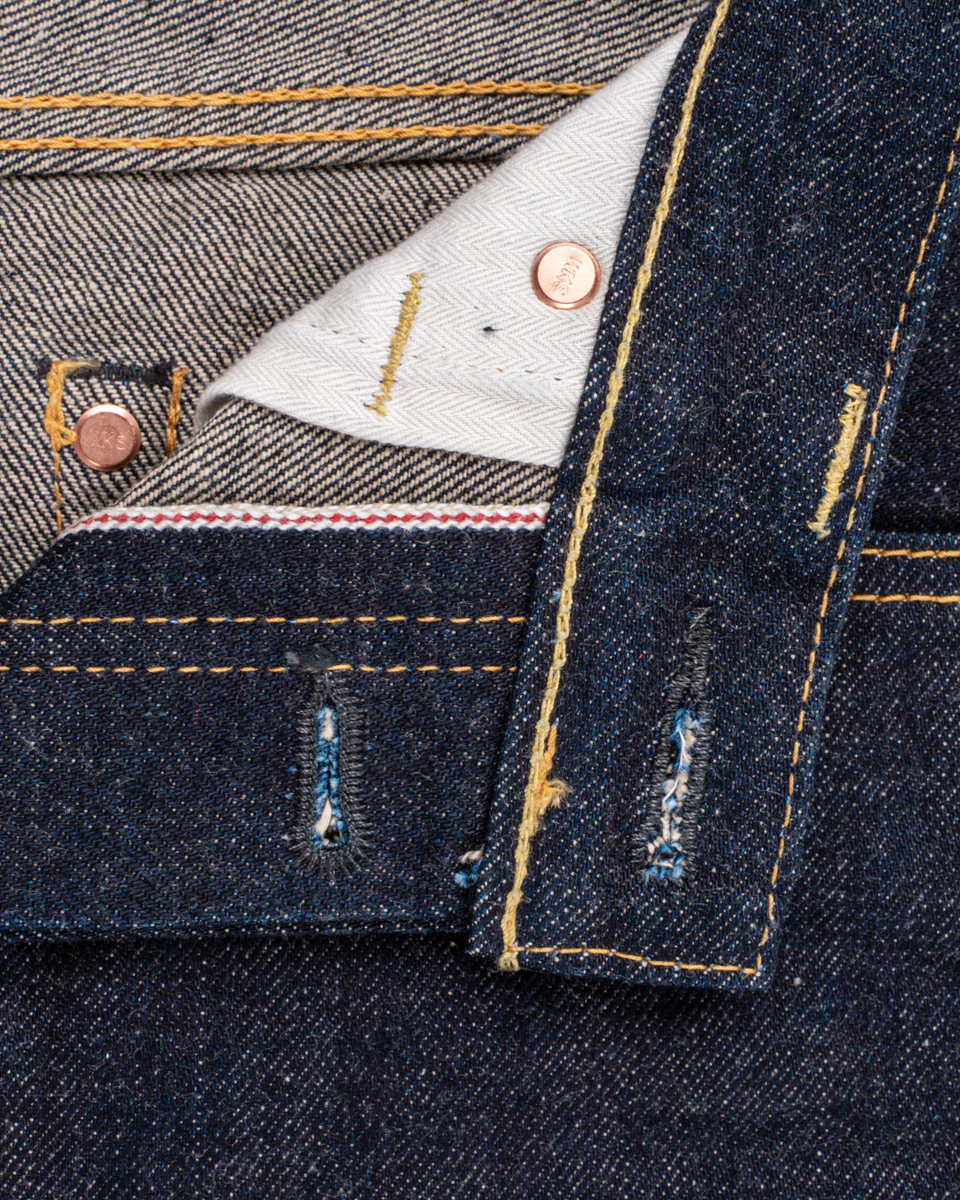
– Traditional button flyThe opening at the front of a pair of trousers with buttons. First introduced in 1873 by Levi Strauss & Co, the riveted button fly has been seen on jeans since the original 501. The zipper fly wasn’t introduced until 20 years later. The majority of Iron Heart jeans use the button fly with the exception of those jeans with “Z” in the lot number (eg. IH-634Z)
– Iron Heart branded tack button at waistband
– Works Inc branded pocket rivets
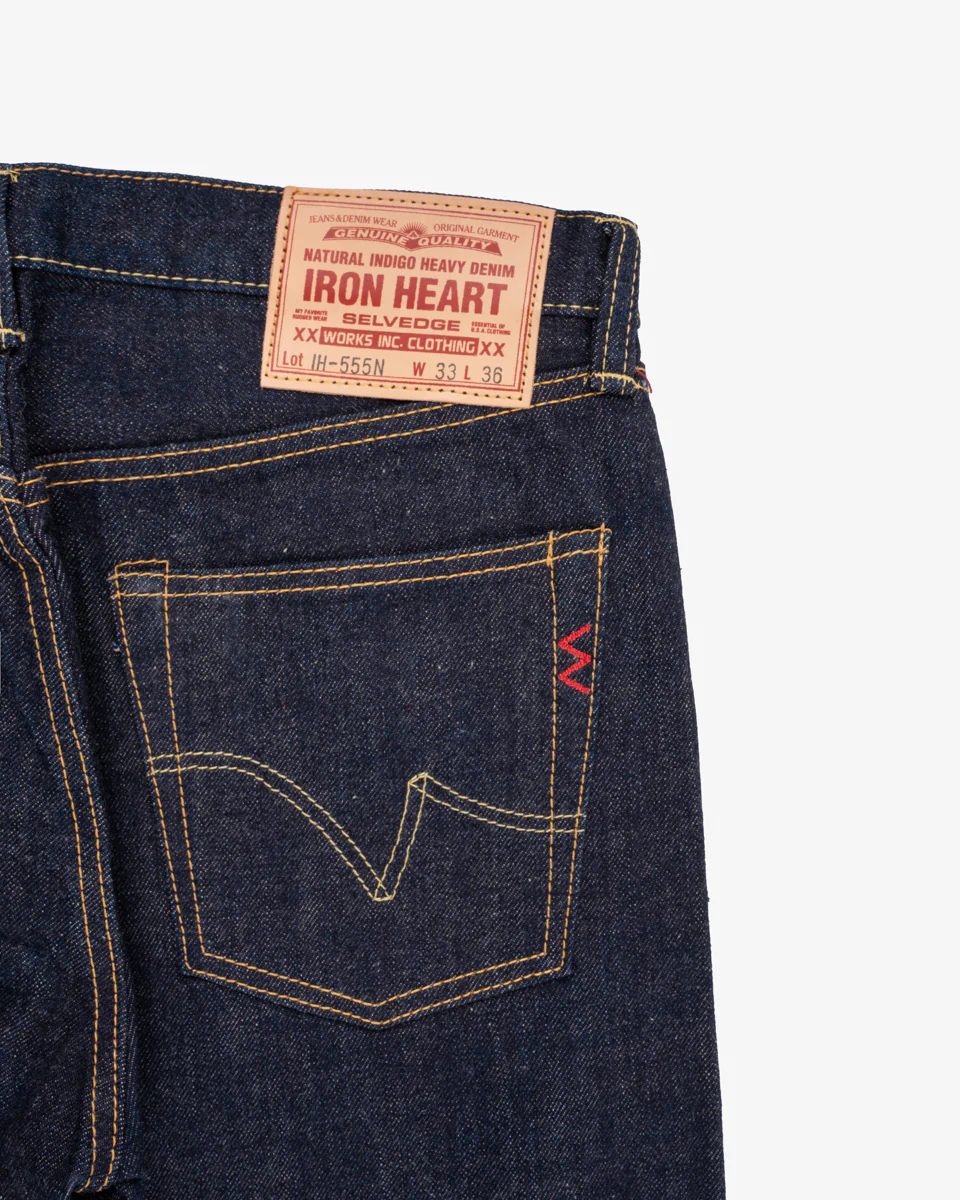
– Hidden rivetsTo help hold the heavyweight tools that were often tucked into back pockets, rivets were introduced into the back pocket construction of jeans in the late 19th century. From 1937 onwards, they were covered to prevent damaging furniture, saddles, and car seats, the so-called hidden rivet was invented. Hidden rivets are similar to the exposed rivets on the front of a pair of jeans, but they are attached before the stitching is done, rather than on top of the pocket after stitching. This means that the rivet is only visible inside the jeans. Hidden rivets were generally dropped in the 1980s as they are complicated and expensive to attach, but have since featured on premium jeans, produced with an eye on older traditions. For denim afficionados this is especially exciting as eventually the rivet will rub through the denim as a result of long, hard, wear. Iron Heart jeans use hidden rivets at the top of their back pockets. on rear pockets
– Poly/cottonPoly/cotton is produced by spinning a sheath of cotton around a core of continuous filament polyester. The result is a thread with the sewing characteristics and traditional look of top quality cotton, yet retaining the many advantages of synthetic threads. stitching for increased strength
– Single and double needle chain stitch construction
– Belt loopsFabric loops that have been positioned around the waistband to hold a belt. Belt loops started to replace suspender buttons in the 1920s, once the belt trend emerged after World War I. With the exception of some early iterations of the 634 cut, Iron Heart sew the belt loops under and into the waistband of their 5-pocket jeans for increased strength and a cleaner aesthetic. anchored at three points and sewn into the waistband
– Heavy cotton pocket bags
IronHeart 666 xhs
| Tag | 28 | 29 | 30 | 31 | 32 | 33 | 34 | 35 | 36 | 38 | 40 | 42 | 44 |
| Waist | 28.7 | 30.3 | 31.9 | 32.6 | 33.8 | 34.6 | 35.5 | 36.7 | 37.9 | 39.5 | 41.0 | 43.5 | 44.5 |
| Front Rise | 9.7 | 9.9 | 10.4 | 10.6 | 11.0 | 11.2 | 11.4 | 11.7 | 11.9 | 12.2 | 12.6 | 12.6 | 12.5 |
| Rear Rise | 14.3 | 14.5 | 14.8 | 15.0 | 15.1 | 15.3 | 15.3 | 15.4 | 15.8 | 16.0 | 16.3 | 16.3 | 16.6 |
| Thigh | 10.3 | 10.9 | 11.3 | 11.6 | 11.9 | 12.1 | 12.5 | 12.9 | 13.2 | 13.7 | 14.2 | 14.7 | 15.0 |
| Knee | 8.1 | 8.2 | 8.3 | 8.7 | 8.9 | 9.1 | 9.4 | 9.6 | 9.7 | 10.3 | 10.6 | 10.6 | 10.8 |
| Hem | 7.4 | 7.6 | 7.7 | 8.1 | 8.1 | 8.3 | 8.5 | 8.7 | 9.0 | 9.3 | 9.7 | 9.8 | 10.3 |
| Inseam | 37.5 | 37.0 | 36.7 | 36.7 | 37.0 | 37.0 | 37.0 | 37.0 | 37.0 | 37.0 | 37.0 | 37.0 | 37.0 |
You can check the shipping conditions according to your delivery zone:
Shipping and Returns
| 2Kg | 5Kg | 10Kg | 15Kg | 20Kg | 25Kg | 31,5Kg | >31,5Kg | |
| SPAIN | 5,23 | 5,90 | 6,45 | 6,80 | 8,39 | 9,77 | 11,17 | +0,38*Kg |
| BALEARES | 6,41 | 7,96 | 9,82 | 11,92 | 14,59 | 17,16 | 20,15 | +0,73*Kg |
| CANARIAS | 40,85 | 53,60 | 63,03 | 78,12 | 97,29 | 115,04 | 134,03 | +4,80*Kg |
| PORTUGAL | 6,41 | 7,40 | 8,48 | 9,58 | 11,13 | 12,48 | 14,00 | +0,49*Kg |
| Zone 1 (Germany) | 12,67 | 14,53 | 18,86 | 23,39 | 27,95 | 32,68 | 38,68 | +1,40*Kg |
| Zone 2 (France) | 14,50 | 16,50 | 20,88 | 25,45 | 30,06 | 34,81 | 40,83 | +1,50*Kg |
| Zone 3 (Aus, Bel, Croa, Slovakia, Slovenia, Hol, Hung, Lux, Pol, Cze. Rep, Rom) | 16,69 | 18,63 | 23,08 | 27,69 | 32,33 | 37,14 | 43,17 | +1,60*Kg |
| Zone 4 (Bulg, Est, Gree, Ire, Let, Lit) | 20,28 | 22,32 | 26,85 | 31,53 | 36,26 | 41,10 | 47,21 | +1,70*Kg |
| Zone 5 (Den, Fin, Swe) | 32,97 | 35,29 | 40,10 | 45,07 | 50,02 | 55,09 | 61,37 | +2,20*Kg |
| Zone 6 (Italy) | 18,01 | 21,04 | 28,18 | 35,63 | 43,19 | 50,97 | 60,91 | +2,2*Kg |
However, shipping costs will be added to the product prices specified and you should know:
- For a minimum order value of €100, we ship to addresses in Spain and Portugal and, for a minimum value of 250€, we ship to the rest of European Union for free.
- For order values below €100, we charge at least €5,23 per package to ship to addresses in Spain.
- For order values below €250 we charge at least 15€ for Germany, France and Italy.
- We charge a flat fee of 18€ for deliveries to the rest of EU.
- For worldwide deliveries outside the EU, please contact us by info@angrysoulsmadrid.com.
Domestic returns, within Spain are free of charge.
International Returns, outside of Spain, the following conditions apply:
- Returns are free if you are exchanging for a different size or a product of equal value.
- If you are returning an item for a refund (not an exchange), the customer is responsible for the return shipping costs. These costs will be deducted from the total amount to be refunded.
Please ensure that all returned items are in their original condition and packaging. For any questions or further assistance, feel free to contact our customer service by info@angrysoulsmadrid.com.


